

KNOW NOW:
COUNTERPUNCH
AMERICAN PUSHBACK ON TRUMP’S OVERREACH
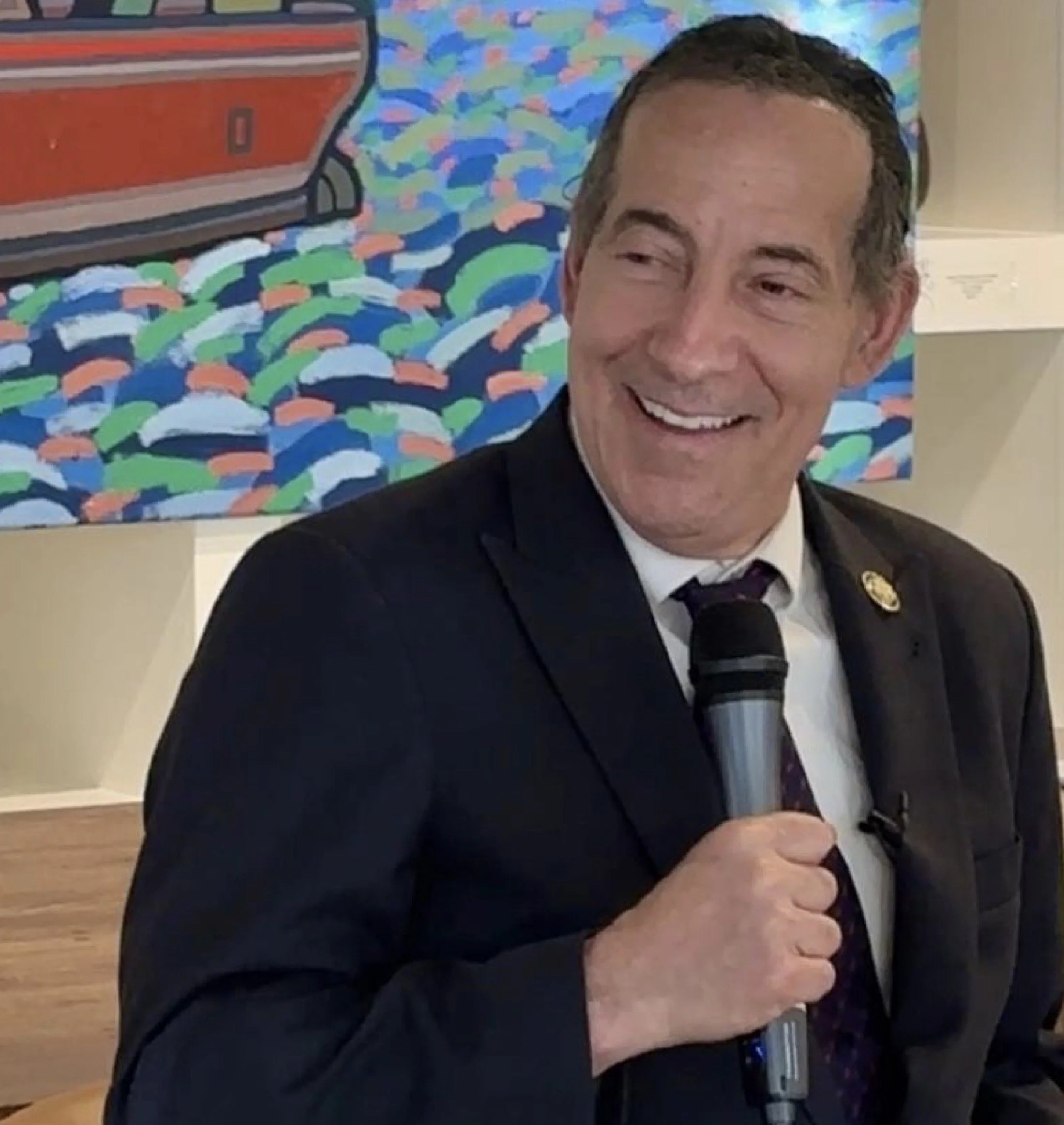
This is Jamie Raskin, the United States House Judiciary Committee’s ranking Democrat and counterpunch to White House assaults on the nation’s Constitution. The US has become a dangerous headliner among rogue states, snatching sovereignty from citizens, seizing control over courts, commerce, and communications. Revered by his Montgomery and Prince George’s County, Maryland constituents and civic-minded American voters writ large, Raskin is reviled by President Donald Trump, who calls the five-term congressman a “TOTAL LOSER” with an “ugly face.”
The Harvard Law Review Editor whose 40-year career teaching Constitutional Law at American University was underscored by passion for American liberty, Jamie Raskin is Congress’ leading, perhaps only Constitutionalist. He entered office during Trump’s first term and has battled executive branch breaches of the rule of law ever since. After serving on the bipartisan select committee investigating the January 6th insurrection, he was appointed lead impeachment manager of Trump’s second trial. Raskin today advises hundreds of lawsuits on behalf of parties whose rights have been abridged by the current administration. Democracy, he always reminds people, is a project, and one that commands our ready attention.
The congressman joined us just after his Capitol Hill vote against the Big Beautiful Bill. Exhausted from the brawl over gutting universities, SNAP, Medicaid and more, he becomes instantly energized when asked what the bill’s passage means. “Throwing 17 million people off of healthcare: that’s a class authoritarian move,” he says, adding “people who are stressed and unhappy and sick and ill” are “not a threat to autocratic power.” The legislation Raskin fought now funds the surge of ICE agents deployed in cities, with disastrous and deadly results.
The public response? Pew and other top surveys find Democrats predictably dismayed with Trump overreach while many Republican counterparts are on the fence. The US system remains the preferred type of governance to most, Gallup’s newly released 2025 Democracy for All Project shows, with more than two thirds surveyed favoring democracy. But over half believe it isn’t working, responding that “freedom of expression, diversity and compromise in government” is “performing poorly or very poorly.” Tracking presidents’ public approval ratings since President Harry Truman, Gallup shows Trump’s relative slump. Long the bastion of the nation’s stability and protection, the federal government causes a maelstrom of national risk. Arbitrary arrests, illegal deportations, slashed social services and nonstop executive order chaos shocked, then emasculated Americans as tightly woven threads of democratic life they had always known are unraveling in real time. ICE’s point blank shootings of American citizens registered popular revulsion, as many hundreds of demonstrations pulled together across the nation last week. Indeed, streets have become the most geographically and demographically diverse way to react, with 2025 the busiest year for anti-Trump demonstrations, including in Trump Country, according to Harvard’s Kennedy School latest data analysis.
It is the courts, cumbersome, and costly, where the nation’s constitutional rights are redressed. “‘Due process’ are the two most beautiful words in the English language,” Raskin says, breaking into a smile. He then digs into claims against the US administration, specifying violations of US Constitutional rights. The filings have been piling up, as the White House accelerates its brazen violations. And they’re becoming more public.
When world-class vibraphonist and band leader Chuck Redd saw Trump’s fast name change on the Kennedy Center wall, he cancelled his widely anticipated Christmas Eve concert, a gig he’s performed for over 20 years. A domino effect followed, with musicians, dancers, singers and a whole raft of scheduled talent scratching their upcoming performances. Tall, lanky and always impeccable in a dress suit, Redd towers over his instrument as his mallets descend on the keys. The native Washingtonian who grew up hosting Dizzy Gillespie at family Thanksgiving dinners quickly drew fans at every jazz festival and in major music houses worldwide. Redd plays with the greats in special appearances, from the Tonight Show to the White House. He is now defending himself against Trump’s punitive million dollar suit.
Who stands up for these targets in the administration’s crosshairs? Trump has already pushed many of the would-be litigators out of the way by threatening and imposing harsh fines on firms that challenge him. Unwilling to carry the financial stakes of standing firm, entire practices have buckled under White House pressure.
“That the law firms were running for the hills, along with the universities and the media and the Republican Congress…That made us enraged!” exclaims John Aldock, who, along with longtime legal colleagues, sprung out of retirement when they saw the landscape. To them, American citizens’ rights were under siege with disappearing protectors. White House threats of reprisals took the muscle out of the US legal profession’s top tier, and commanded that the nation’s finest legal minds defend the deterioration of democracy by pledging nearly $1 billion in expertise to Trump. “We thought ‘what can we do to fight back?’” Aldock said of his career peers who have met faithfully over the years to talk sports, politics, and the law. A few months into Trump’s second term, their conversations became dominated by their country in crisis, and the answer was clear.
“The president is lawless and corrupt. The justice system is hanging by a thread. The Supreme Court has made an awful lot of rulings that undermine the rule of law and undermine the Constitution. The Courts of Appeal are mixed. The trial courts are the major mechanisms left to preserve the rule of law.”
Enter three octogenarian men and a pro-bono law firm taking on Trump. Aldock, Tom Green and Barry Levine, all veteran leaders of white shoe firms and US attorneys offices, founded the Washington Litigation Group. An anonymous Silicon Valley donor funded the salaries of the first attorneys, a friendly landlord gave them furnished office space on K Street, Stanford University sends and underwrites interns. The firm has hired eight younger well-equipped attorneys to handle high profile work, and it’s a magnet for legal authorities, prominent jurists, and former top Justice Department officials. A steering committee meets Thursdays to decide intake: the clients they accept and the professionals they hire. The caseload isn’t about volume, it’s about impact. The team defends individuals and institutions illegally targeted. And it fights government overreach. Most recently the firm filed against the Kennedy Center for a name change it claims is “legally void and damages the institution’s public mission by turning a national memorial into a political vanity project.”
Public pushback on the administration’s erosion of American democracy takes on many forms. “There are the courts and there are the streets. I am a big believer in the No Kings Movement,” Aldock says, expecting participation which doubled over two marches, to widen. “There is no substitute and every American can do that.” Raskin agrees, contending that the most effective opposition is based on the streets, in the courts and at the ballot box.
Both caution that unless Americans fight for democracy, totalitarianism is now a tremendous risk. When Hannah Arendt escaped Nazi Europe in the 1930s and reached US shores, she trained the world’s focus on the evils of “totalitarianism.” She observed that the only natives were American Indians; the rest, she said, were immigrants bound together by their commitment to the Constitution. Today the astute nation-state observer would ask if Trump’s presidential challenges to the Constitution are forcing an unbinding of us. Will we, the people, unravel? Raskin warns Americans still overwhelmed and those already engaged: “We cannot lose the muscle memory of what it means to be part of a democracy. This is not the fight of one day, of one week or one month, one year or one decade,” the Congressman implores, “this is the fight of our lives.”
DO NOW:
The US position in the Freedom of the World survey plunged in 2025, citing embattled electoral processes, money corrupting politics, and radical, even violent partisanship. States, cities, and citizens are ironically squaring off against their own US government on national security grounds, all tracked here. Keep current on vanishing accountability as Trump eliminates oversight, firing 17 Inspector Generals. Stay primed on what’s at stake and teach the children by giving young students in high schools interactive ways to learn their nation’s Constitution. Need a tune up on civil liberties? This primer explains why they’re worth fighting for. Here’s a superb newly-released read by two Pulitzer Prize journalists documenting the demise of the rule of law through purging and packing of top officials at the Justice Department. Prepare for the coming elections by grasping the strategy to undermine what’s free and fair. Find comprehensive contacts for your state and local elected officials here. Want to volunteer for upcoming campaigns? Ballotpedia will help you navigate all candidates and parties with a voter toolkit and ways to engage. Prompted to show how you feel? First examine the impact of nonviolent protest with Harvard University’s Kennedy School. For a retrospective, Center for American Progress looks at the history of peaceful opposition. To locate ongoing or planned demonstrations, try an array of platforms to find what meets your needs